

Business owners keep asking the same question: "Should I build an AI chatbot or an AI voice caller?" The answer depends entirely on how your customers actually reach you. Most businesses get it wrong and build the one that's trendy instead of the one that fits.
This is the straight decision framework.
The quick answer
Build an AI chatbot if: Most of your leads start on your website, in an email, or on a form. Visitors ask questions before they call. Your traffic is meaningful but your phone is quiet.
Build an AI voice caller if: Most of your leads are phone calls. Customers expect to call and talk to a human. You're missing calls after hours. You have bilingual call volume.
Build both if: You have meaningful website traffic AND meaningful call volume, especially if you're in a service business with after-hours inbound.
Most businesses only need one of the two. A few need both. Almost nobody needs neither.
What an AI chatbot actually does
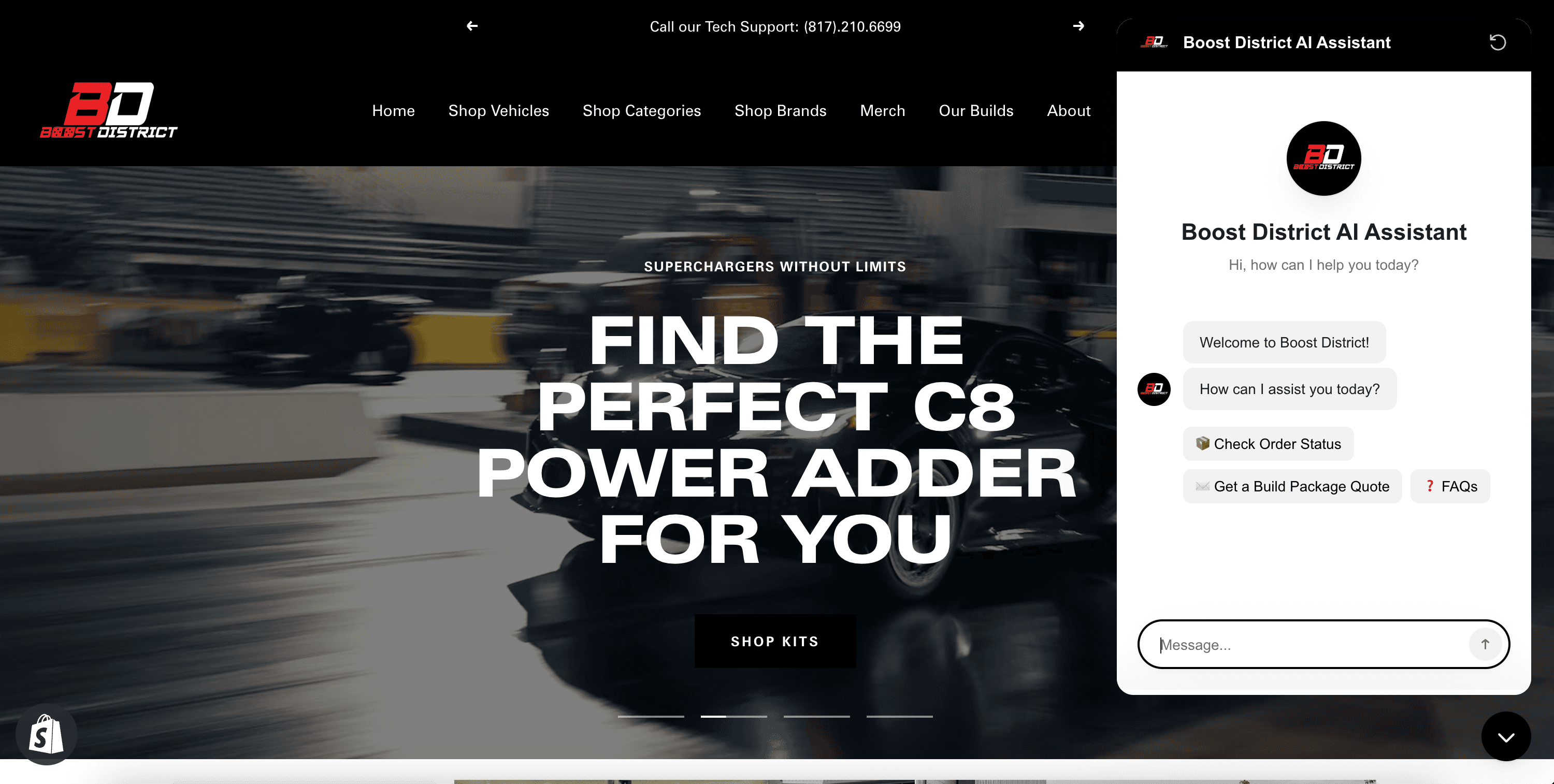
An AI chatbot is a conversational layer on your website that:
- Answers common customer questions 24/7
- Qualifies leads before they reach your sales team
- Books appointments directly into your calendar
- Captures contact info and syncs to your CRM
- Hands off to a human when the question is too complex
A well-built chatbot handles 60–80% of incoming website inquiries without human involvement. The remaining 20–40% get qualified and routed to your team, pre-filtered for quality.
Where it wins:
- E-commerce stores with repetitive product questions
- Service businesses with FAQ-heavy websites
- Lead-gen businesses where visitors want to check pricing or availability before calling
- Any site with meaningful traffic but weak lead capture
Where it fails:
- Highly complex products requiring real expertise (custom enterprise software, complex B2B solutions)
- Industries where customers strongly prefer phone contact (older demographics, high-trust services)
- Very low-traffic sites where the setup cost exceeds the value
We build chatbots as part of our AI Chatbots service, scoped and quoted to what your business needs.
What an AI voice caller actually does
An AI voice caller is a phone agent that:
- Answers inbound calls 24/7 in a natural-sounding voice
- Qualifies the caller with 3–5 routing questions
- Books appointments directly into your calendar
- Takes messages and routes them to the right team
- Can run outbound campaigns (lead qualification, follow-up, appointment reminders)
- Handles bilingual calls (English + Spanish) on Pro tier
A well-built voice agent answers every call, books qualified appointments, and transfers only genuine emergencies. You stop missing after-hours calls, which in service businesses can be 30–50% of total call volume.
Where it wins:
- Law firms (especially bilingual markets)
- Medical practices (HIPAA-compliant configurations)
- Home services (HVAC, plumbing, electrical, roofing) — especially with emergency after-hours volume
- Real estate agents and teams
- Any service business with high call volume and limited reception capacity
Where it fails:
- Businesses where customers already prefer text/web contact
- Highly technical sales conversations requiring expert judgment
- Industries where brand voice and personality are core to every interaction
We build voice agents as part of our AI Voice Callers service, scoped and quoted to your use case. Live deployments for Hector Peña Law (bilingual legal intake) and Texas Rubbish Dumpsters (sequential outbound lead qualification).
The decision framework
Five questions. Answer them honestly.
1. How do your current leads reach you?
Count the last 20 leads. How many:
- Came through your website (form, chat, email)?
- Came via phone call?
If it's 80/20 web-to-phone: start with a chatbot. If it's 80/20 phone-to-web: start with a voice caller. If it's 50/50: build both, chatbot first (usually cheaper to start).
2. How many calls do you miss?
Look at your call log. In the last month, how many calls were:
- Unanswered during business hours
- Incoming after hours (evenings, weekends)
If missed calls are >15% of total call volume: voice caller is probably the higher-ROI first move.
If missed calls are <5%: the phone is handled fine — build a chatbot instead for the website side.
3. Where do most of your leads drop off?
Customer journey mapping. Where in the funnel do you lose people?
- "They visit the site but don't fill out a form" → chatbot problem (answer questions, capture them in-flow)
- "They call and get voicemail, never call back" → voice caller problem
- "They book a call but don't show up" → CRM automation problem (different service, different fix)
4. What's the complexity of your typical interaction?
A chatbot works great for: pricing, hours, availability, basic qualification, scheduling. A chatbot struggles with: complex consultative conversations, emotional/sensitive situations, high-ticket sales requiring trust building.
A voice caller works great for: standard intake, qualification, booking, FAQs, urgent service dispatching. A voice caller struggles with: extremely complex multi-party calls, emotionally charged situations where callers need empathetic human interaction, highly technical product demos.
Match the tool to the complexity.
5. What's your budget?
- AI Chatbot: $1,000–$5,000+ setup, $100–$350+/mo
- AI Voice Caller: $2,500–$10,000+ setup, $250–$500+/mo
Chatbots are almost always cheaper to start. If budget is tight, a chatbot is often the right first move. You can add a voice caller later once the chatbot is generating ROI.
When to build both
About 30% of service businesses benefit from having both a chatbot and a voice caller. The pattern looks like:
- Website has meaningful traffic (500+ unique visitors per month minimum)
- Phone also has meaningful inbound (50+ calls per month)
- You miss calls or respond slowly to web inquiries
- You have the budget for $3,500+ setup + $350+/mo combined
When both are deployed, they usually work together:
- Chatbot captures web visitors, books calls
- Voice caller handles inbound phone calls
- Both feed the same CRM
- Qualified leads go to the same sales queue
Examples of businesses that benefit from both:
- Law firms — bilingual voice caller for phone + chatbot for case pre-qualification on the website
- Medical practices — HIPAA-compliant voice caller + appointment booking chatbot
- Real estate teams — voice caller for after-hours buyer calls + chatbot for listing inquiries
Common mistakes
Building the trendy one instead of the useful one. AI voice callers feel cooler, but most businesses get more ROI from a chatbot first.
Building cheap versions of both instead of a good version of one. A $1,000 chatbot + $2,500 voice caller built poorly is worse than a $3,500 chatbot built well. Start with the one you need most and do it right.
Skipping the hand-off rules. The bot or agent needs clear rules about when to transfer to a human. "Transfer on caller request" + "transfer on complex questions" + "transfer on anything sensitive" is a good default.
Not measuring the results. Set a baseline: missed calls per week, website lead conversion rate, response time. Measure after 30 days. If the numbers didn't move, the tool is misconfigured or wrong for your business.
How to actually deploy one
Whichever you pick, the rollout is roughly:
Week 1: Discovery call and scope. For voice: script and flow design. For chatbot: conversation design workshop.
Week 2: Build + training. Voice agent gets trained on your business. Chatbot gets trained on your FAQs, product info, and brand voice.
Week 3: Live testing. You and your team stress-test it with edge cases. Real examples you've dealt with. Common objections.
Week 4: Go-live. Monitor daily for the first week, weekly after that. Tune based on actual call/chat transcripts.
After 30–60 days, you'll know if it's working. If it is, the ROI compounds — the tool gets better every week with tuning.
Not sure which fits your business? Book a free call — we'll walk through your current lead flow and tell you honestly which one to build first. Or see the full pricing for AI Chatbots and AI Voice Callers.